

The Sapling Sprouts
The Mulanje Cedar
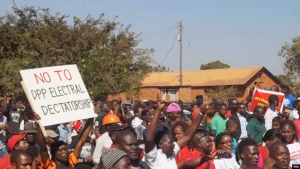
A Malawian boy was born on August 5, 1987, in Dowa, Malawi. In the late 20th century, Malawi was far from being considered one of the more prosperous countries in the world. From 1964 to 1994, the nation was ruled by a very suppressive and controlling government. People could be detained without a charge. Margaret Marango Banda, chairwoman of the National Women’s Organization in the north, was detained in 1988 for criticizing corruption in CCAM. Similarly, Gomile Kuntumanji died in a prison in 1990, serving 21 years without rhyme or reason.
Malawi’s corrupt officials only cared about their own gain, creating widespread poverty across the country. The boy grew up in this environment, living in poverty on a farm and helping harvest maize. Corrupt acts, like selling the country’s maize reserves, weakened the country’s food security. When droughts hit, famine became common, leaving families with meager food on the table and making school attendance nearly impossible. Despite these hardships and educational setbacks, the boy remained motivated. He kept learning, often taking trips to his local library to grow his knowledge.
The Kapok Tree
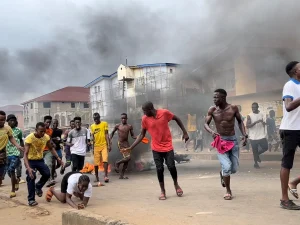
Over 3,000 miles away in March of 1991, a conflict started that would last over a decade in Sierra Leone. Before, trouble had boiled with corruption in political power. Debt, expenses for needs like food imports, and varying success in the mineral industry for exports were the product of the corruption, focusing on foreign investment rather than their own people. When turmoil from Liberia had spilled over the border into Sierra Leone territory, the president of Sierra Leone, Joseph Momoh, reacted by deploying soldiers. Trouble also brewed when the Revolutionary United Front (RUF), a group from Sierra Leone, joined Liberian forces. In 1992, Momoh was forcefully taken out of control. Power was in the hands of the RUF. They began to claim more and more territory under their control, especially diamond mines, which created more turmoil, as it funded the wrongdoings. RUF would subject civilians to horrendous crimes such as dismemberment, where they would cut off limbs or other body parts, such as legs or ears. Other violence and control, such as forced labor, occurred. Many were forced to do what was ordered, such as being used as a human shield, and children were not excluded from these harsh acts.
Finally, in January of 1996, Valentine Strasser, the person in charge of the violence, was ousted in a military coup. Not so long later, while the aftermath was still present and the reformation was still going, a moment happened. On October 26, 1996, a Sierra Leonean boy was born in Freetown, the capital of Sierra Leone. He had four other siblings, all older than him. His family lived on the Dworzark Farm, a very poor neighborhood in the capital. Sierra Leone does not have access to electricity as easily as someone from New York City would. To solve the problems that plagued his life, he would begin to pick up inventing and engineering.
When Wind Meets Waves
The Wind
One day, the Malawian boy travelled to the library. It was there that he found a book titled “Using Energy.” It was intriguing; an American textbook. Having previous interests in engineering, tinkering and fixing up radios, it felt relieving, like he found gold. The business he had made with the radios, where he would fix them up for people, wasn’t as satisfactory. He wanted to make an impact. English is not a language he had learned. So, while his eyes only glanced at the unknown words, he jumped at the pictures. They showed diagrams like wells and windmills that could create electricity. This was his opportunity to do something even bigger for his community. It was an opportunity for William Kamkwamba.
At fourteen years of age, he began. He spent a lot of time digging around town in trash and rubbish to collect pieces for his idea— a windmill. He built up an assortment of resources, gathering rubber from bicycle tires, metal scraps, and wood. At first, his community looked at it strangely. Some even thought he was using drugs. They could not be further from the truth. He was not harming; he was helping. Once complete, the community began to understand when the light bulb had been lit. He would go on to make other windmills, one reaching an astonishing 39 feet.
The Waves
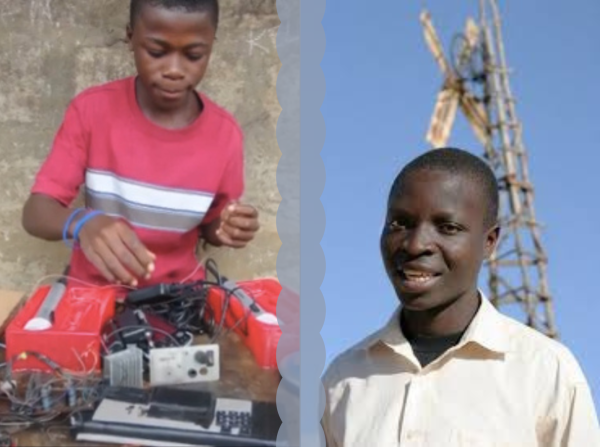
In Sierra Leone, his limited resources didn’t stop him. Kelvin Doe didn’t stop. He could not buy the spare parts necessary, so he searched in nearby scrapyards and streets. At night, he would work on it in the living room of their three-room house. Tinkering isn’t so quiet, and he would have to go to bed at some point, but he continued this cycle. It was not a random assortment to him. He would mentally assemble things. When he was twelve, it worked. He created a microphone receiver, sound amplifier, and three-channel mixer. This allowed him to create a mini DJ set. Promptly, he nicknamed himself DJ Focus, inspired by his perspective on perseverance and its power. Two years later, at fourteen, he added an antenna and an FM transmitter. He even powered it himself, with a self-built generator.
Ripples of Recognition
The Malawian Moves
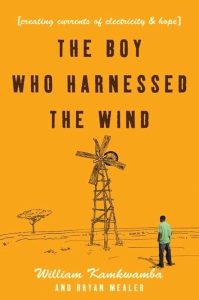
William Kamkwamba’s impact was there. It started slowly at first, but grew. In the beginning, locals came over to simply charge phones. Soon, a local paper in Malawi covered his story. It was inspirational, and it spread more, getting covered by newspapers across the world. He later got invited to do a TED talk. His spirit to help his community and his brilliance guided him to go to college. He earned a degree from Dartmouth in environmental studies. His success allowed him to give back even more to his village, supplying them with clean water. His story, originally a memoir made in 2009, was spread out even farther, being adapted into other media forms.
The Salone Sway

Kelvin Doe had power. Not too late after, in 2012, he was invited to a competition in Sierra Leone to build something impactful after he was heard on the news by the organizer. He decided to make a bigger generator than the one for his DJ set to power lights in places. He was so inventive that the organizer shared him around. Not even a year had passed, and he was invited to the United States as a speaker. His brilliance was inspiring and earned him the Auditor Choice Award. He was also invited to the Massachusetts Institute of Technology, or MIT, to participate in the “Visiting Practitioner’s Program”. With his popularity, news sources like CNN and NBC lit a spotlight on his story. Later, he was invited to do a TEDxTeen lecture to engineering undergraduates at Harvard, and many other talks, like The Clinton Foundation’s Global Initiative conference, in Florida, Israel, Abu Dhabi, and many African countries.
The Spark and the Zephyr
It takes a lot to be an inspiration. It takes even more to build it from the ground up. Both of them built their way up one metal scrap at a time. It can be difficult for many to imagine that the world they live in can be privileged. Despite their setbacks, they worked hard to make things right, and all it took was some creativity, ingenuity, and good old-fashioned engineering. Sometimes all it takes is a spark or some wind. Privilege does not define worth.



Nathan Maritote • Jan 15, 2026 at 3:52 pm
Wow. This article was amazing. I like how you looked for something so sad, and told how these two figures turned that around in just a couple of years. Crazy!
Cierra Smith • Jan 9, 2026 at 4:41 pm
Well done!